
Pre-Order Alert: Good Smile Company Figma Doom: The Dark Ages – Doom Slayer DX Edition
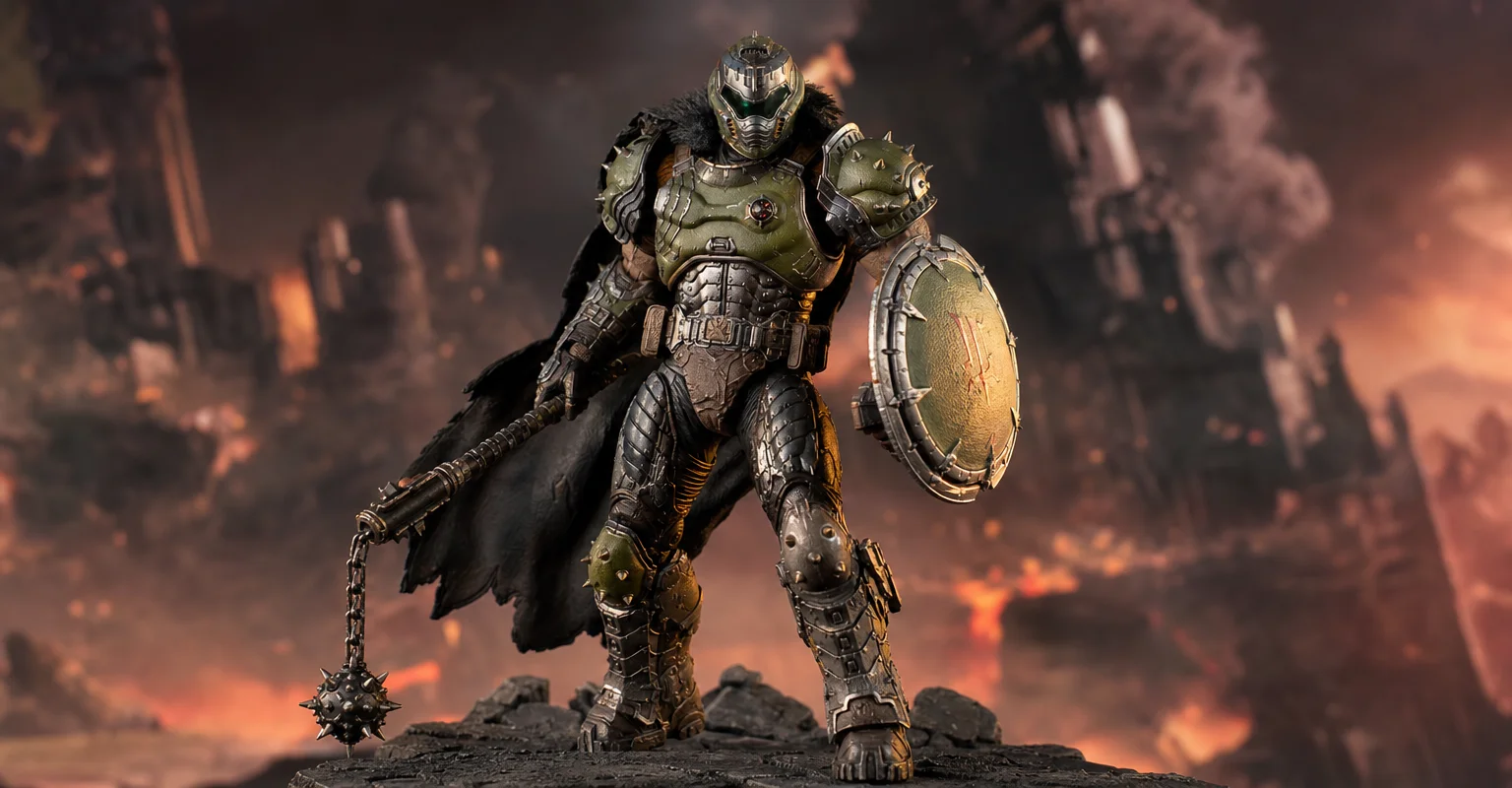
Good Smile Company continues to lean into premium game-character collectibles, and the new Figma Doom: The Dark Ages Doom Slayer DX Edition arrives with exactly the kind of announcement that catches both figure collectors and longtime series fans. This is not just another routine product listing. It is the kind of pre-order drop that matters because Doom remains one of the clearest crossover points between game identity, collector culture, and visual iconography.
That matters especially on Figure Rocks, where the strongest coverage is not blind hype but contextual value. A release like this belongs naturally inside Gaming News, but it also connects to the broader question of why certain designs endure. Doom Slayer is not just recognizable because he is famous. He is collectible because the silhouette, armor language, and emotional role all translate cleanly into figure form. That makes this kind of news item more useful when it is framed as part of a larger collector and player ecosystem rather than as a bare announcement.
Why this pre-order stands out
The phrase DX Edition immediately tells collectors that the standard expectation changes. In figure language, a deluxe release usually signals broader display value, more accessory interest, and a stronger sense that the manufacturer is treating the item as an event rather than as a basic line extension. For collectors who already know the Figma ecosystem, that distinction matters because it affects both presentation and perceived long-term appeal.
For Doom fans, the timing is just as important as the product itself. A pre-order tied to Doom: The Dark Ages does more than sell a figure. It reinforces the visual identity of the new era of Doom and gives fans a way to engage with that identity before the wider cycle of gameplay impressions, reviews, and long-tail discussion fully settles. In practical terms, that makes the release newsworthy beyond the usual collector niche.
Why Doom Slayer works so well as a figure
Some game characters are popular but visually weak in collectible form. Doom Slayer is the opposite. The armor, stance language, weapons, and overall physical presence give manufacturers a strong base to work with. Even in smaller articulated formats, the character carries enough mass and recognition to remain visually convincing on a shelf. That is one reason Doom collectibles repeatedly attract attention beyond the immediate fan base.
This is also where Figure Rocks can connect news coverage with its broader editorial logic. The best product-related articles do not stop at release awareness. They also speak to why the object matters in terms of player memory, design readability, and display appeal. That is where Experience becomes relevant. Even though this is a figure story, the emotional force behind the collectible still comes from the player experience the character represents.
What collectors will likely care about first
- Whether the DX Edition meaningfully expands display options.
- How faithfully the armor and proportions match the new game identity.
- Whether articulation supports aggressive Doom-style poses without looking compromised.
- How the edition compares to earlier Doom collectibles in shelf presence and finish.
- Whether the pre-order timing makes it a likely early sellout item for dedicated fans.
These are the real collector questions, and they matter more than generic marketing language. A good pre-order article should speak to interest, risk, and relevance. It should help the reader decide whether this is a pass, a wait-and-see item, or a meaningful pickup tied to a franchise they actually care about.
Why this belongs in gaming news, not just figure news
A release like this belongs in Gaming News because it reflects how modern game culture extends beyond the software itself. Major characters now move across gameplay, brand identity, collectibles, merchandising, and community signaling. For a franchise like Doom, that expansion feels natural because the character design is already iconic and immediately legible across formats.
That makes the article more valuable when it avoids shallow product-copy language and instead places the announcement inside a larger pattern. Good game coverage does not only ask what was released. It asks why this release matters now, who it is really for, and how it fits into the current life of the franchise. In that sense, the pre-order is not just merchandise news. It is part of the ongoing public shape of Doom as a modern game property.
The collector angle and the player angle
Collectors and players do not always want the same thing, but Doom Slayer often sits in the overlap. Collectors may care most about sculpt, accessories, and shelf value. Players may care more about whether the figure captures the tone of the new game properly. The strongest article acknowledges both audiences because the item succeeds precisely where those interests meet.
That overlap is where Figure Rocks can build authority. The portal is strongest when it connects object value to player meaning. A figure matters more when it carries the atmosphere, aggression, and identity that fans associate with the game. That is another reason the article should not remain a detached product note. It should speak to experience, recognition, and cultural weight.
The practical takeaway
The Good Smile Company Figma Doom: The Dark Ages Doom Slayer DX Edition pre-order matters because it sits at a strong intersection of collector appeal and franchise identity. It is relevant to figure buyers because the DX label raises expectations. It is relevant to Doom fans because it extends the new game era into collectible form. And it is relevant to gaming news because major franchises increasingly live through both play and physical presence.
A strong article on this release should therefore do more than announce availability. It should explain why the figure stands out, why the timing matters, and why Doom Slayer remains one of the few game characters whose design translates naturally into durable collectible interest. That is what makes the piece useful for readers and structurally valuable inside Figure Rocks.
Related Articles
路由器QoS与SQM:哪个真正解决高负载下的延迟峰值问题?
许多QoS功能只是营销噱头。SQM(队列管理)专注于负载下的延迟控制——这才是缓冲膨胀峰值问题的真正根源。以下是实际差异的说明。
无边框与独占全屏:何时影响手感与稳定性
大多数情况下,这并不重要。但在某些配置中,窗口模式会影响计时、叠加层和稳定性。以下是你需要关注的情况以及如何做出决定。
无线控制器延迟:迷思、现实与唯一重要的基准线
无线并非天生就不好。当计时不稳定时,你会感受到中断。了解控制器延迟的真正根源,以及使其保持一致的基准线。
鼠标加速与原始输入:如何选择而不影响瞄准
加速并非恶行——反复无常才是。了解原始输入的变化,何时加速才合理,以及如何在不每日重置肌肉记忆的情况下,选择一个稳定的设置。
NVIDIA Reflex基础解析:何时有效(何时无效)
当游戏受GPU限制且运行稳定时,Reflex技术能有效减少渲染队列延迟。了解其发挥作用的实际条件,以及可能导致其失效的陷阱。
空间音频叠加:快速解决方向混淆问题
当您叠加空间处理层(游戏+系统+头戴设备应用)时,方向感会失效。每次仅使用一个处理层,您的空间提示便会恢复清晰可辨。
游戏路由器设置清单:真正重要的配置项
大多数路由器调整并无助益。真正有效的设置包括:负载下的队列管理、稳定的Wi-Fi表现,以及避免增加延迟或不稳定性的功能。
游戏路由器设置清单:防止延迟飙升的10项关键设置
大多数路由器在移除尖峰发生器后都能良好运行游戏。请遵循这个简单的检查清单:队列管理、合理的Wi-Fi设置以及稳定的负载行为。
游戏中的QoS迷思:哪些有益,哪些有害,以及真正的优先级
QoS并非一个神奇的“游戏”开关。良好的队列管理能在负载下降低延迟,而糟糕的QoS则会增加抖动或破坏公平性。以下是理解这一概念的稳定思路。
游戏路由器放置指南:导致延迟突增的距离与障碍物因素
在购置新路由器前,先优化环境布局。摆放位置、障碍物及信号干扰都会引发网络波动,导致延迟与卡顿现象。
存储流媒体卡顿修复:当资产加载跟不上时
流媒体卡顿发生在新区块加载时:存储、解压或资源流限制。在降低所有图形设置前,请按此顺序尝试修复。
Windows HDR 快速基准:防止HDR画面暗淡失真的简易设置方案
PC上的HDR效果常常看起来不对劲,根源在于基准设置不当。采用这套精简的Windows HDR配置方案,既能保持高光细节清晰可辨,又能避免画面昏暗褪色。