
Celeste
Celeste amiibo – Animal Crossing Series
Definition
The Celeste amiibo is a read-only NFC figure that stores a character identity. When placed on an NFC reader of a supported Nintendo system, the game recognizes the stored data and triggers Celeste related interactions. The chip itself cannot be rewritten by the user. It simply transmits the character ID each time it is scanned.
Name and Release Period
The name of the figure is mostly consistent worldwide. In English regions the character is called Celeste. In Japan she is known as Fūko. The amiibo figure appeared in the Animal Crossing amiibo series around December 2015 in most regions, released alongside other characters connected to town services and special visitors.
Technical Function and NFC Usage
The amiibo contains a read-only NFC chip. It cannot be written or modified by the player. When scanned in a compatible game, the figure triggers Celeste specific interactions. In most supported titles the amiibo can activate its bonus once per day per game profile, following the standard limitation used by many Animal Crossing amiibo figures.
Design, Look and Pose of the Figure
The Celeste amiibo depicts the small red owl character standing upright on a round amiibo base. Her body is compact, with a rounded head and short wings held slightly forward. She wears a pink bow on the right side of her head, a detail closely associated with her appearance in the games. The figure shows Celeste holding a small yellow telescope with both wings. The telescope is angled upward, suggesting that she is observing the night sky. Her eyes are large and bright, facing slightly upward in the same direction as the telescope. The pose feels calm and focused, reflecting her role as a character connected to astronomy and stargazing within the Animal Crossing world.
Character Background and Meaning of the Pose
Celeste first appeared in the early Animal Crossing titles as the younger sister of Blathers, the museum curator. While Blathers manages fossils, fish and insects, Celeste is linked to the observatory that once existed in the museum building in Animal Crossing: Wild World and Animal Crossing: City Folk. Players could visit the observatory at night where Celeste assisted with constellation creation. The telescope shown in the amiibo figure refers directly to that role. The upward gaze mirrors how the character is usually portrayed in connection with stars, constellations and night sky events.
Game Compatibility and Effects
The Celeste amiibo is compatible with several Nintendo titles that support Animal Crossing amiibo figures. In Animal Crossing: amiibo Festival on Wii U the figure can be used as a playable board piece representing Celeste on the game board. In Animal Crossing: Happy Home Designer on Nintendo 3DS, scanning the amiibo allows players to design a vacation home for Celeste and unlock related furniture requests connected to her theme. In Animal Crossing: New Leaf – Welcome amiibo on Nintendo 3DS, the figure can summon Celeste to the campground through the amiibo lamp system, allowing players to invite her to visit and order certain themed items if available. In Animal Crossing: New Horizons on Nintendo Switch, the amiibo can invite Celeste to the Photopia studio on Harv’s Island where she can appear in staged photos. The scan functions primarily as a character summon rather than unlocking large gameplay systems.
Conclusion
The Celeste amiibo functions mainly as a physical shortcut to a familiar character from the Animal Crossing series. Its NFC chip reliably triggers appearances across several Nintendo games, usually once per day depending on the title. The figure itself reflects Celeste’s identity as a quiet observer of the night sky. The telescope, the upward gaze, the small bow. All of it connects back to the observatory role she once held in earlier Animal Crossing games. In practice the amiibo works as a small bridge between the character’s history and the different game systems that continue to reference her.
Related Articles
Kicks
The Kicks amiibo belongs to the Animal Crossing amiibo figure line released during the early expansion of Nintendo’s NFC figure ecosystem. Like the other characters in this series, the figure functions as a physical key that connects to compatible Nintendo games through NFC. When scanned, the amiibo links the character Kicks to different in-game systems. The practical value is simple: it allows players to access character-specific interactions, small unlocks, or themed content depending on the supported title.
amiibo Minimal Database Model: The Fields You Need for Games, Figures, and Unlocks
If you want an Amiibo portal, you need structure: game → support rules → reward types. This guide defines the minimal fields that let you scale cleanly.
Fast Identification Checklist for amiibo Figures
Amiibo figures circulate in large numbers and across many series, which makes quick identification part of everyday collecting work. Boxes, figures, and small manufacturing differences appear again and again when handling them in bulk. Over time a few practical checkpoints have become common. They are simple observations. Not theory. The following checklist collects those observations in a short, catalog-style form.
Lottie
The Lottie amiibo belongs to the Animal Crossing amiibo figure line released during the early phase of Nintendo's amiibo program. It represents the small otter character known from the design office in Animal Crossing Happy Home Designer. Like other figures in this series, the object contains a small NFC chip. When scanned by compatible Nintendo systems, the figure links the character to in-game systems and unlocks small pieces of related content.
amiibo Collection Strategy: Completionist, Curated, or Gameplay-Only
Most collector stress comes from unclear goals. Choose one strategy—completionist, curated, or gameplay-only—and the rest of your decisions get easier.
amiibo Hub: Start Here (Pillars, Guides, and What to Buy First)
Your Amiibo library in one place: basics, compatibility, buying, and collecting. Use this hub to choose your path and avoid beginner mistakes.
amiibo Reprints – Release Cycles, Waves, and Their Role in Nintendo’s Ongoing Game Integration
amiibo are NFC-enabled character figures and cards introduced in November 2014. A reprint, in simple terms, is a renewed production run of an already released figure without functional changes. The internal chip remains the same. Packaging details may vary slightly by production year, but the gameplay interaction does not change. Reprints are therefore not new editions. They are returns to circulation.
Resetti
The Resetti amiibo belongs to the Animal Crossing amiibo figure line released during the early expansion of Nintendo’s NFC-based character figures. Like others in this series, the figure functions as a physical representation of a character combined with a small NFC chip that communicates with compatible Nintendo systems. When scanned, the figure links the character Mr. Resetti to supported games and unlocks small interactions or character appearances tied to his role in the Animal Crossing universe.
Joker - number 83
The Joker amiibo from the Super Smash Bros. Series expands the roster of NFC figures with a character that originally did not belong to Nintendo’s own catalog. It represents Joker as he appears in Super Smash Bros. Ultimate. The figure functions as an interactive data carrier. It can be read and written, meaning it stores fighter data and learns through repeated use in compatible titles.
Mabel
The Mabel amiibo belongs to the Animal Crossing amiibo figure line. It represents the hedgehog tailor connected to the clothing shop that appears across the series. The figure does not introduce a new character. It transfers an established shop role into a scannable format for compatible Nintendo systems.
Hero - number 84
The Hero amiibo from the Super Smash Bros. Series represents the default Hero as he appears in Super Smash Bros. Ultimate. It is a physical NFC figure that can store gameplay data and interact with compatible Nintendo systems. In simple terms, it is both a collectible and a functional in-game character replica. The added value lies in its ability to create and train a Figure Player (FP) that develops over time through player interaction.
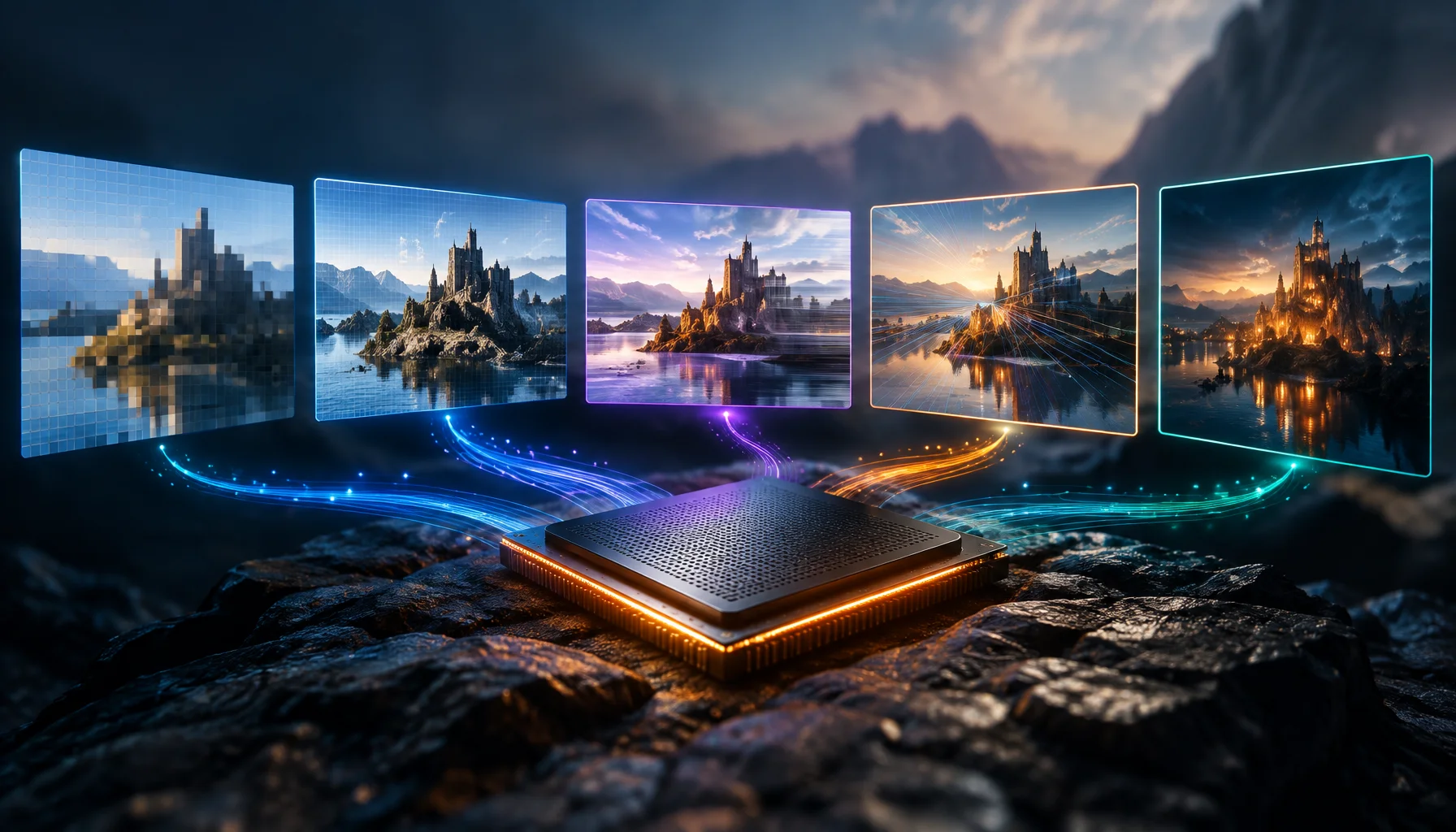
AMD FSR Redstone Is Not Just FSR 4: Upscaling, Frame Generation, Ray Regeneration and Radiance Caching Explained
AMD’s FSR naming changed because FSR is no longer one feature. Redstone is now a neural-rendering suite with separate technologies for upscaling, frame generation, ray-traced reconstruction and learned global illumination.