Blog - Discover our latest articles and insights

Per page
NVIDIA G-Assist Is Not Just a Chatbot: How Its Local SLM, Tools, Plug-ins and MCP Actually Work

NVIDIA G-Assist Is Not Just a Chatbot: How Its Local SLM, Tools, Plug-ins and MCP Actually Work

NVIDIA Project G-Assist looks like a chatbot, but its real architecture is closer to a local AI agent. A small language model interprets your request, system state provides current PC information, tools perform real actions, and plug-ins extend what the assistant is allowed to control.
Read More
Published
Windows Auto SR Is Not DLSS: How NPU Upscaling Works Without Game Integration

Windows Auto SR Is Not DLSS: How NPU Upscaling Works Without Game Integration

Windows Auto SR can upscale supported games without DLSS, FSR or XeSS integration. Instead of running the reconstruction model inside the game on the GPU, Windows uses the NPU to rebuild a higher-resolution image from a lower-resolution render.
Read More
Published
DirectStorage 1.4 Does Not Make Your SSD Decompress Games: What Zstd and GPU Decompression Actually Do

DirectStorage 1.4 Does Not Make Your SSD Decompress Games: What Zstd and GPU Decompression Actually Do

DirectStorage 1.4 adds Zstandard compression, GPU decompression and a new Game Asset Conditioning Library, but the SSD itself is still only one part of the loading pipeline. This guide explains what the SSD, DirectStorage, CPU, GPU and game engine each actually do.
Read More
Published
Why PC Games Stutter When Compiling Shaders — and How Advanced Shader Delivery Changes It

Why PC Games Stutter When Compiling Shaders — and How Advanced Shader Delivery Changes It

Shader stutter happens when a PC game has to compile GPU programs at the wrong moment. Microsoft Advanced Shader Delivery moves much of that work off the player’s PC by preparing hardware-specific shaders ahead of time and delivering them with the game.
Read More
Published
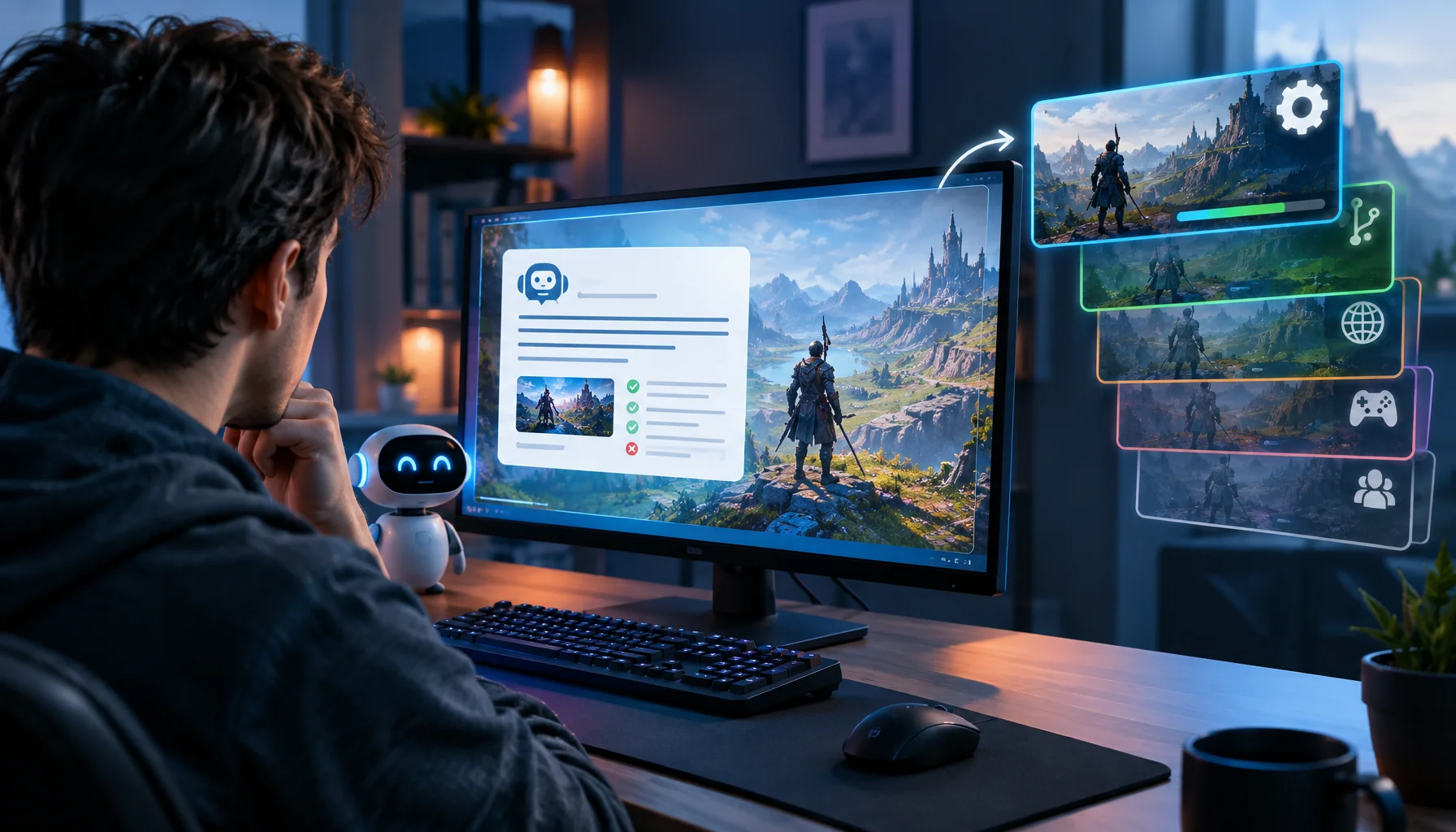
RTX Neural Texture Compression Is Not Upscaling: How AI Can Trade Texture Memory for GPU Compute

RTX Neural Texture Compression Is Not Upscaling: How AI Can Trade Texture Memory for GPU Compute

NVIDIA RTX Neural Texture Compression changes how game materials can be stored. Instead of keeping every texture channel only as conventional texels, a material can be compressed into compact latent data and a small neural decoder, then reconstructed by the GPU when needed.
Read More
Published

DLSS 5 Is Not Just Upscaling: What 3D-Guided Neural Rendering Actually Changes

DLSS 5 Is Not Just Upscaling: What 3D-Guided Neural Rendering Actually Changes

DLSS 5 moves AI into a new part of the graphics pipeline. Instead of only reconstructing resolution or generating extra frames, 3D-Guided Neural Rendering uses the game engine’s own frame as the foundation and enhances lighting and material detail under developer control.
Read More
Published

DLSS 4.5 6X: Why 300 FPS Does Not Mean the Game Is Rendering 300 Frames

DLSS 4.5 6X: Why 300 FPS Does Not Mean the Game Is Rendering 300 Frames

DLSS 4.5 can generate up to five additional frames for every traditionally rendered frame on supported RTX 50 Series GPUs. This guide explains the difference between rendered FPS and displayed FPS, why CPU bottlenecks can be bypassed at the presentation layer, and why latency still needs to be measured separately.
Read More
Published
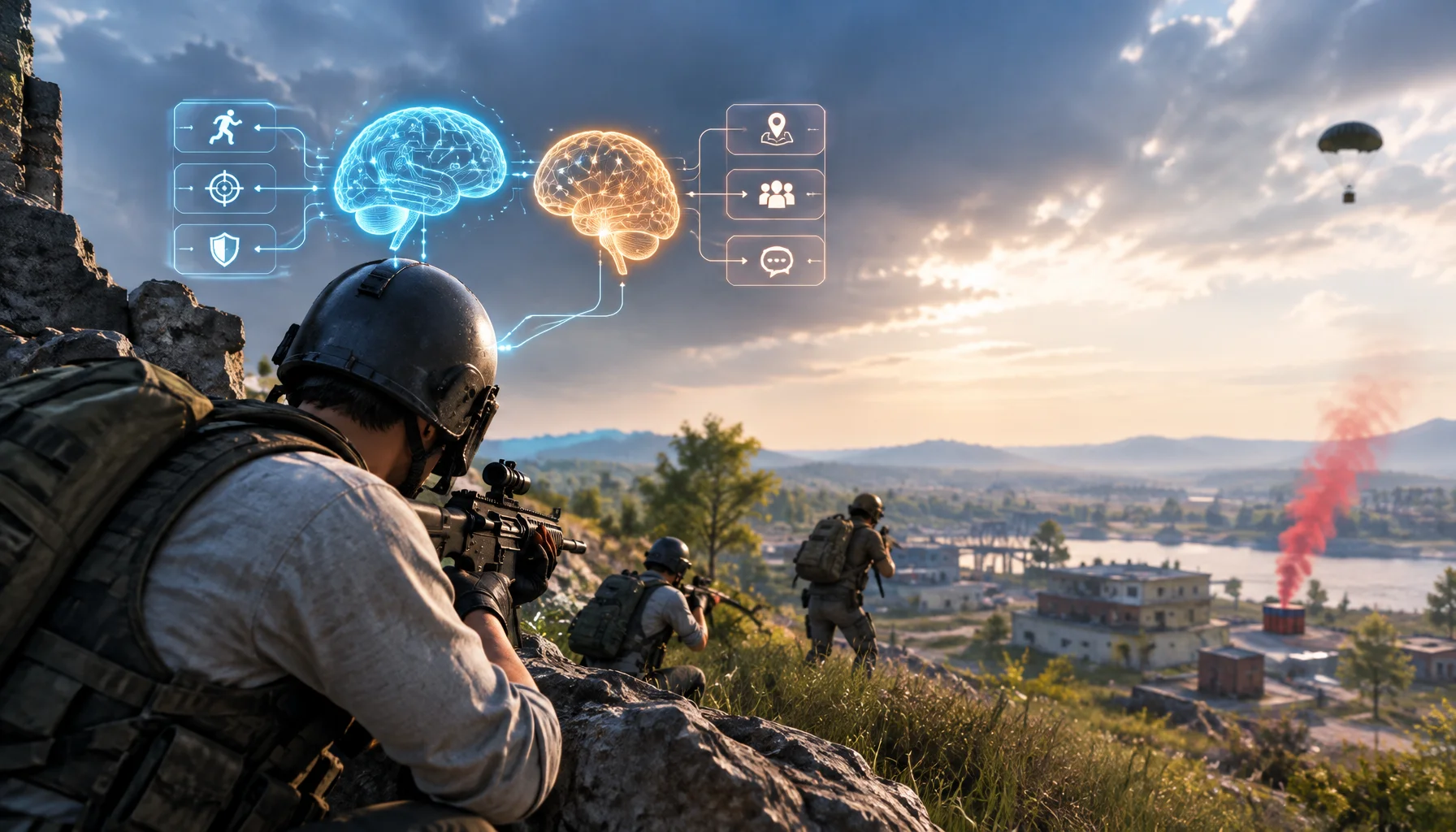
VRAM Usage Is Not VRAM Requirement: Why a Full Memory Meter Does Not Tell the Whole Story

VRAM Usage Is Not VRAM Requirement: Why a Full Memory Meter Does Not Tell the Whole Story

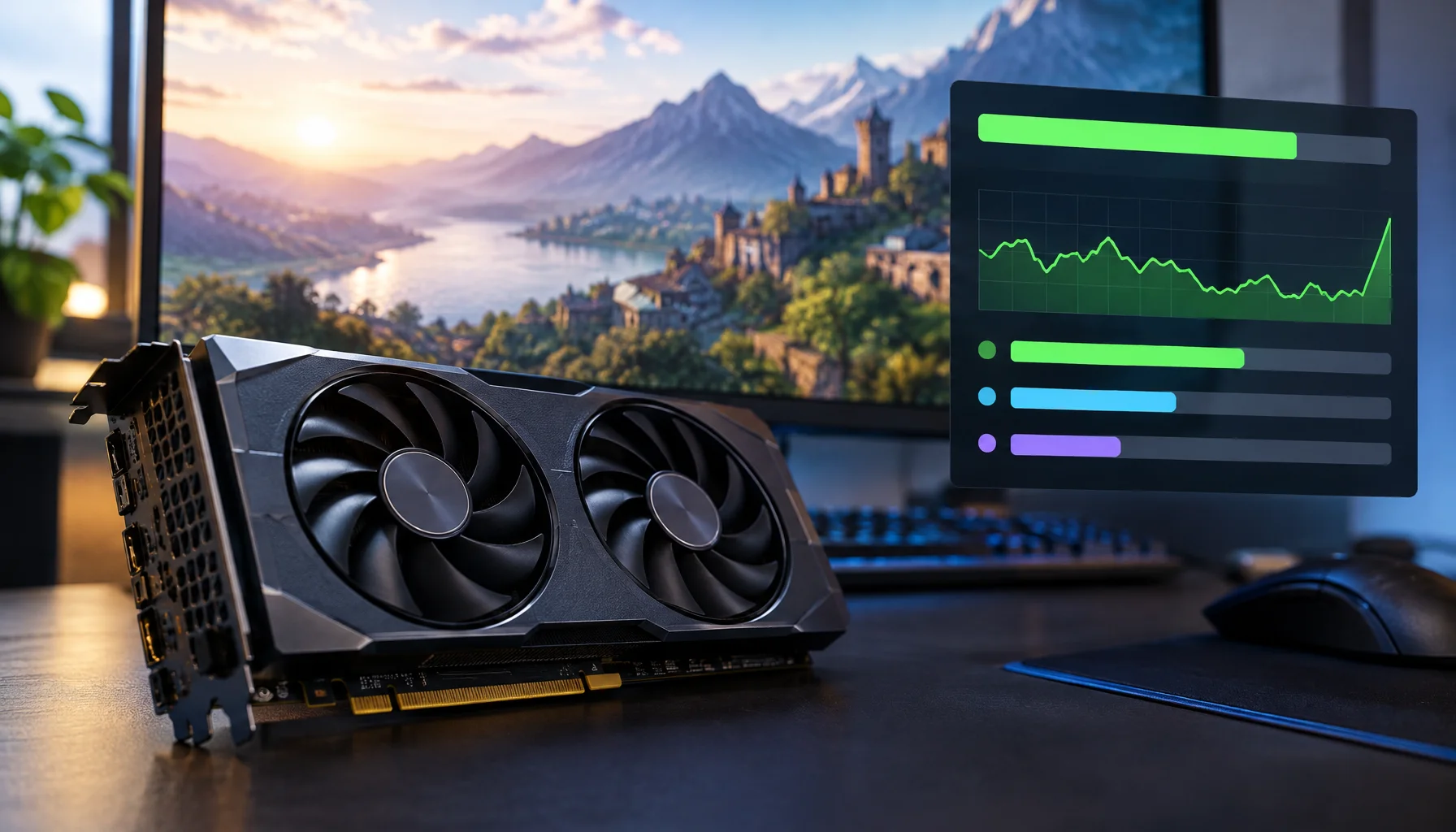
Seeing 7.8 GB used on an 8 GB graphics card can look like proof that a game has run out of VRAM. It is not that simple. This guide explains VRAM capacity, residency budgets, working sets, shared memory and how to tell whether memory pressure is actually causing stutter.
Read More
Published

Why 120 FPS Can Still Feel Bad: Frame Time, 1% Lows and Stutter Explained

Why 120 FPS Can Still Feel Bad: Frame Time, 1% Lows and Stutter Explained

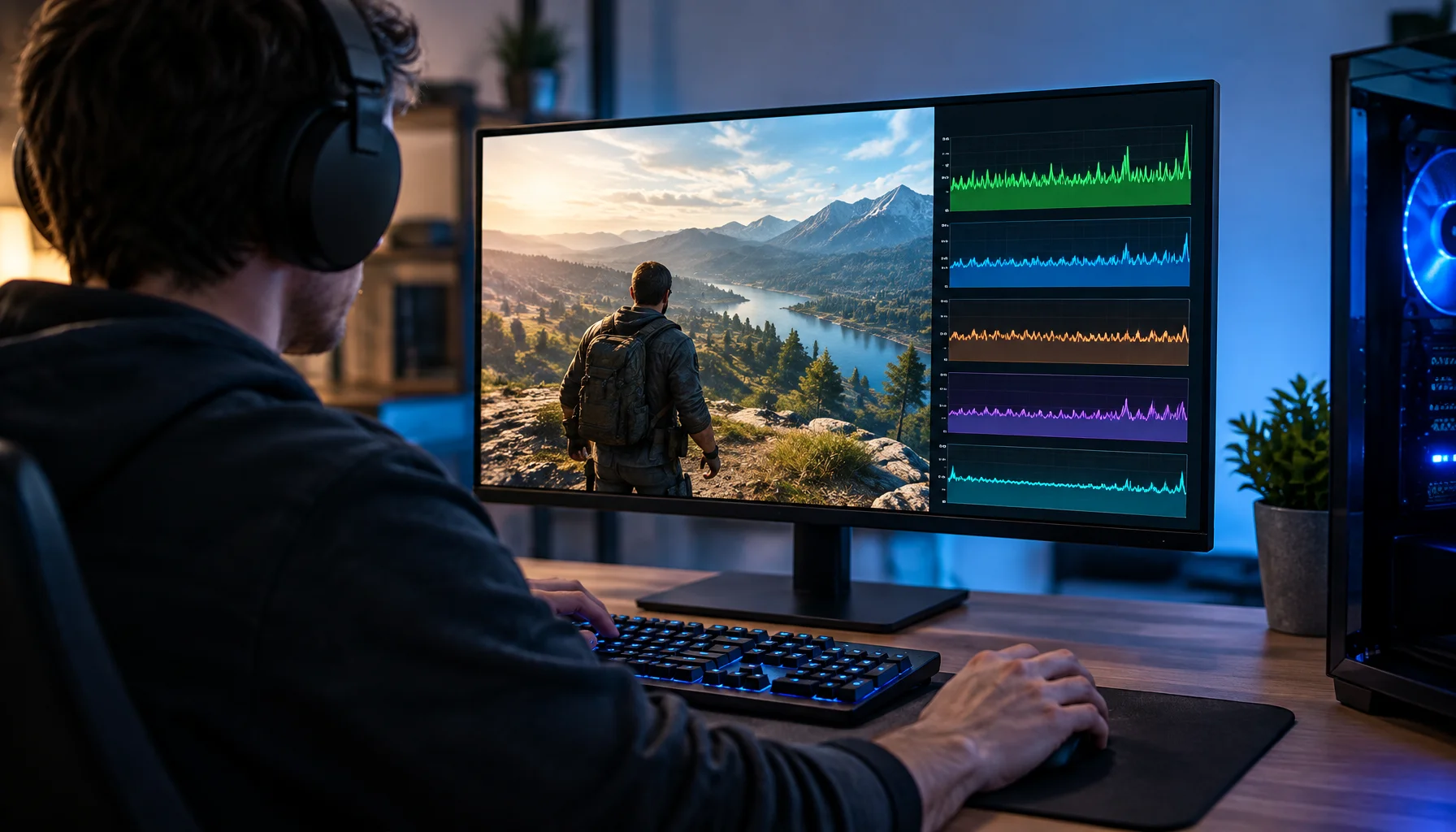
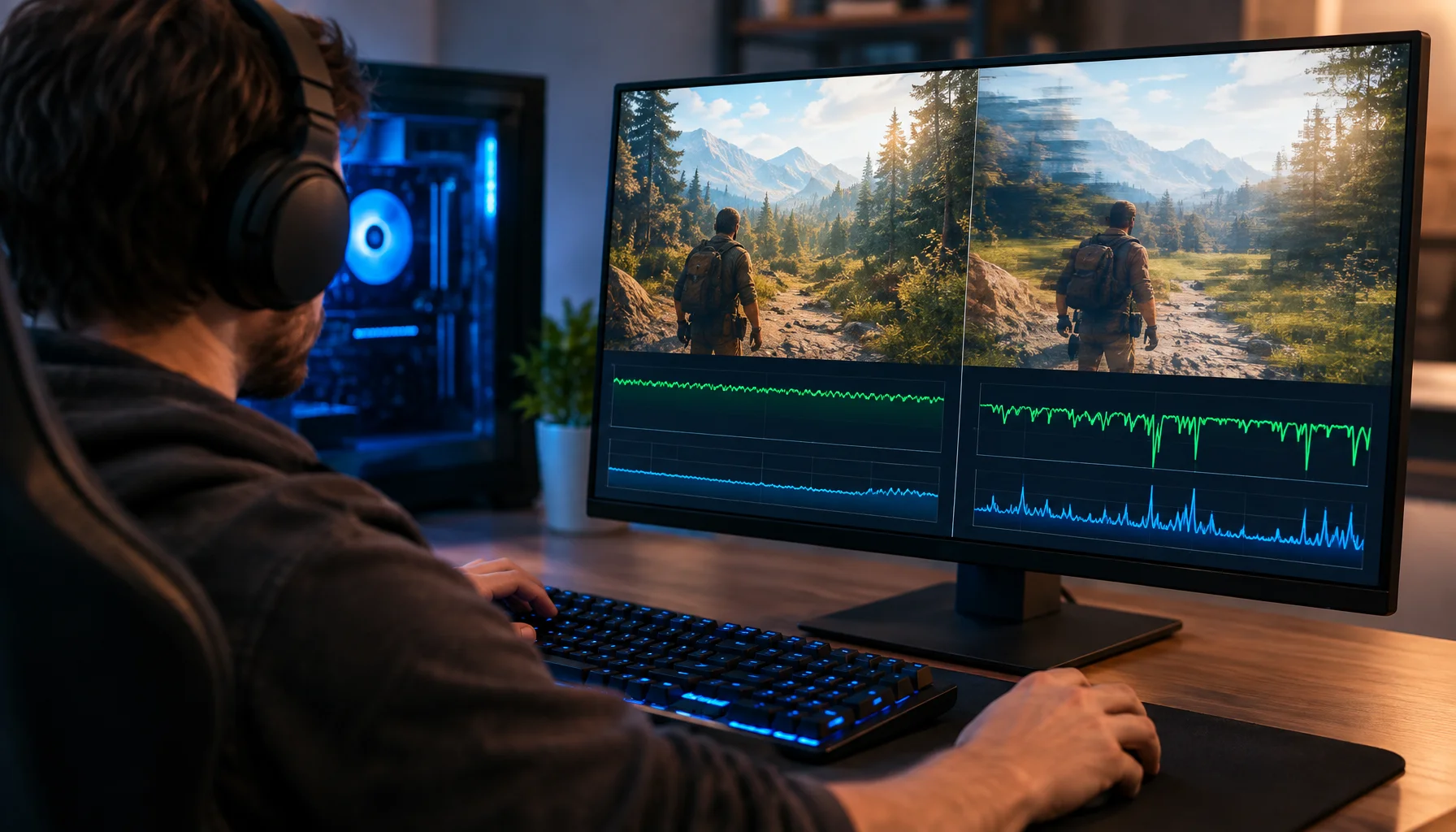
A game can report 120, 144 or even 200 FPS and still feel rough. This guide explains why average FPS can hide bad frame delivery, how frame time and 1% lows expose stutter, and how to diagnose whether the CPU, GPU or another part of the pipeline is causing the problem.
Read More
Published

Your Game Assistant Knows the Game — But Does It Know Your Game State?

Your Game Assistant Knows the Game — But Does It Know Your Game State?

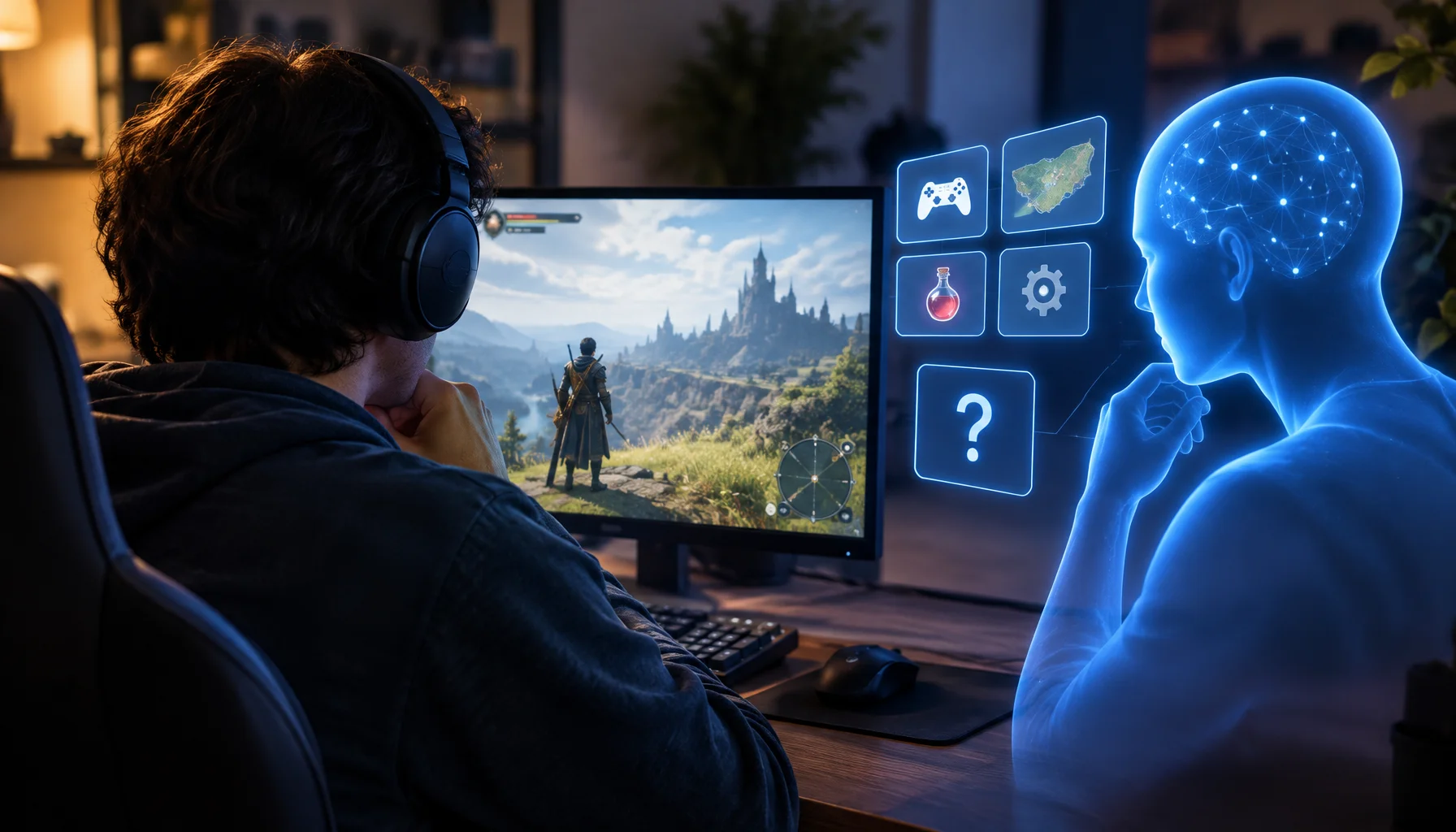
A gaming AI can understand the mechanics, know the current patch and still give bad advice because it does not know what is true in your actual run. This guide explains decision-critical game state, hidden variables, freshness and how to tell whether an assistant has enough context to make a valid recommendation.
Read More
Published
Patch Notes Are Not Game State: Why AI Game Advice Goes Stale After an Update

Patch Notes Are Not Game State: Why AI Game Advice Goes Stale After an Update

A gaming AI can give an answer that sounds completely correct and still be wrong for the game you are actually playing. This guide explains version drift across patches, builds, beta branches, regions, modes and live-service state—and how to test whether advice still applies.
Read More
Published
DirectX Is Becoming an ML Platform: What Linear Algebra and Neural Shaders Mean for Future Games

DirectX Is Becoming an ML Platform: What Linear Algebra and Neural Shaders Mean for Future Games

DirectX is moving beyond traditional graphics shaders. Microsoft is adding hardware-accelerated linear algebra directly to HLSL and a separate path for larger ML models, laying the foundation for neural textures, learned materials, neural lighting and other AI-driven rendering techniques.
Read More
Published
PUBG Ally Shows Why AI Teammates Need Two Brains: Fast Reflexes and Slow Reasoning

PUBG Ally Shows Why AI Teammates Need Two Brains: Fast Reflexes and Slow Reasoning

A language model can understand tactics and player intent, but it should not control every movement and combat reaction directly. PUBG Ally shows a more practical architecture: fast behavior-tree control for reflex actions, combined with a small language model for planning, coordination and natural conversation.
Read More
Published
When Gaming AI Sounds Right but Isn't: The Reasoning Problem Behind Game Assistants and Agents

When Gaming AI Sounds Right but Isn't: The Reasoning Problem Behind Game Assistants and Agents

Gaming AI is moving from scripted NPCs toward assistants and agents that can perceive, reason and act inside virtual worlds. But games create a difficult reasoning environment: patches change facts, player goals change what “best” means, game state changes the correct action, and confident AI explanations can hide missing context or false assumptions. Reliable gaming AI needs more than a better prompt.
Read More
Published
Why a 5G OpenWrt Router Can Be a Smart Upgrade for Gaming, Streaming and Mobile Work

Why a 5G OpenWrt Router Can Be a Smart Upgrade for Gaming, Streaming and Mobile Work

A 5G OpenWrt router like the ZBT Z8102AX is more than a simple internet box. For gaming, streaming, mobile work and backup internet, it can become a flexible network platform with 5G connectivity, external antennas, dual-SIM potential and more control than many closed consumer routers.
Read More
Published
1 / 19