
Pre-Order Alert: Good Smile Company Figma Doom: The Dark Ages – Doom Slayer DX Edition
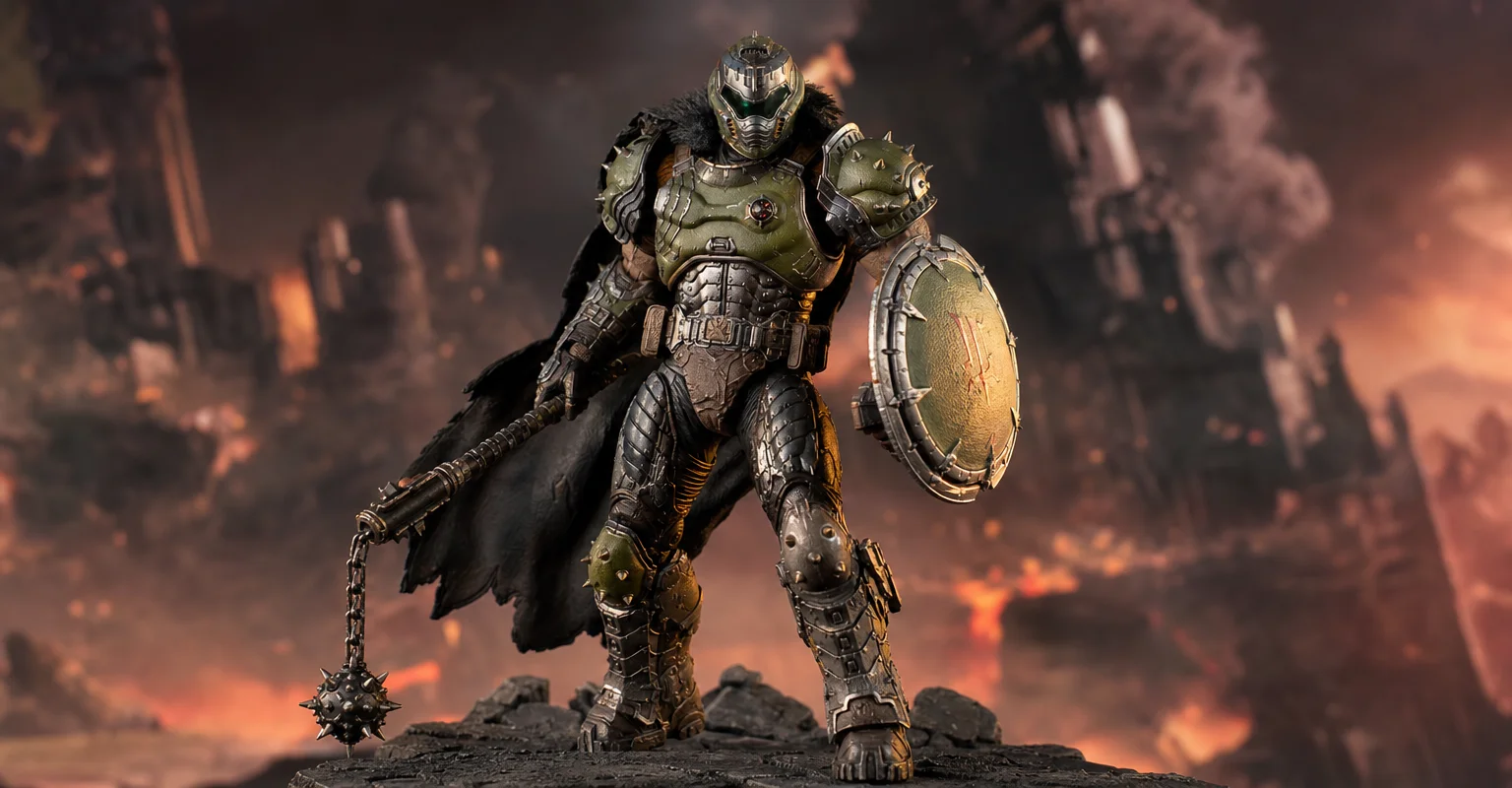
Good Smile Company continues to lean into premium game-character collectibles, and the new Figma Doom: The Dark Ages Doom Slayer DX Edition arrives with exactly the kind of announcement that catches both figure collectors and longtime series fans. This is not just another routine product listing. It is the kind of pre-order drop that matters because Doom remains one of the clearest crossover points between game identity, collector culture, and visual iconography.
That matters especially on Figure Rocks, where the strongest coverage is not blind hype but contextual value. A release like this belongs naturally inside Gaming News, but it also connects to the broader question of why certain designs endure. Doom Slayer is not just recognizable because he is famous. He is collectible because the silhouette, armor language, and emotional role all translate cleanly into figure form. That makes this kind of news item more useful when it is framed as part of a larger collector and player ecosystem rather than as a bare announcement.
Why this pre-order stands out
The phrase DX Edition immediately tells collectors that the standard expectation changes. In figure language, a deluxe release usually signals broader display value, more accessory interest, and a stronger sense that the manufacturer is treating the item as an event rather than as a basic line extension. For collectors who already know the Figma ecosystem, that distinction matters because it affects both presentation and perceived long-term appeal.
For Doom fans, the timing is just as important as the product itself. A pre-order tied to Doom: The Dark Ages does more than sell a figure. It reinforces the visual identity of the new era of Doom and gives fans a way to engage with that identity before the wider cycle of gameplay impressions, reviews, and long-tail discussion fully settles. In practical terms, that makes the release newsworthy beyond the usual collector niche.
Why Doom Slayer works so well as a figure
Some game characters are popular but visually weak in collectible form. Doom Slayer is the opposite. The armor, stance language, weapons, and overall physical presence give manufacturers a strong base to work with. Even in smaller articulated formats, the character carries enough mass and recognition to remain visually convincing on a shelf. That is one reason Doom collectibles repeatedly attract attention beyond the immediate fan base.
This is also where Figure Rocks can connect news coverage with its broader editorial logic. The best product-related articles do not stop at release awareness. They also speak to why the object matters in terms of player memory, design readability, and display appeal. That is where Experience becomes relevant. Even though this is a figure story, the emotional force behind the collectible still comes from the player experience the character represents.
What collectors will likely care about first
- Whether the DX Edition meaningfully expands display options.
- How faithfully the armor and proportions match the new game identity.
- Whether articulation supports aggressive Doom-style poses without looking compromised.
- How the edition compares to earlier Doom collectibles in shelf presence and finish.
- Whether the pre-order timing makes it a likely early sellout item for dedicated fans.
These are the real collector questions, and they matter more than generic marketing language. A good pre-order article should speak to interest, risk, and relevance. It should help the reader decide whether this is a pass, a wait-and-see item, or a meaningful pickup tied to a franchise they actually care about.
Why this belongs in gaming news, not just figure news
A release like this belongs in Gaming News because it reflects how modern game culture extends beyond the software itself. Major characters now move across gameplay, brand identity, collectibles, merchandising, and community signaling. For a franchise like Doom, that expansion feels natural because the character design is already iconic and immediately legible across formats.
That makes the article more valuable when it avoids shallow product-copy language and instead places the announcement inside a larger pattern. Good game coverage does not only ask what was released. It asks why this release matters now, who it is really for, and how it fits into the current life of the franchise. In that sense, the pre-order is not just merchandise news. It is part of the ongoing public shape of Doom as a modern game property.
The collector angle and the player angle
Collectors and players do not always want the same thing, but Doom Slayer often sits in the overlap. Collectors may care most about sculpt, accessories, and shelf value. Players may care more about whether the figure captures the tone of the new game properly. The strongest article acknowledges both audiences because the item succeeds precisely where those interests meet.
That overlap is where Figure Rocks can build authority. The portal is strongest when it connects object value to player meaning. A figure matters more when it carries the atmosphere, aggression, and identity that fans associate with the game. That is another reason the article should not remain a detached product note. It should speak to experience, recognition, and cultural weight.
The practical takeaway
The Good Smile Company Figma Doom: The Dark Ages Doom Slayer DX Edition pre-order matters because it sits at a strong intersection of collector appeal and franchise identity. It is relevant to figure buyers because the DX label raises expectations. It is relevant to Doom fans because it extends the new game era into collectible form. And it is relevant to gaming news because major franchises increasingly live through both play and physical presence.
A strong article on this release should therefore do more than announce availability. It should explain why the figure stands out, why the timing matters, and why Doom Slayer remains one of the few game characters whose design translates naturally into durable collectible interest. That is what makes the piece useful for readers and structurally valuable inside Figure Rocks.
Related Articles
Stutter Fixes That Stick: The Stability-First Playbook
Most stutter fixes fail because they skip triage. Use this playbook: identify stutter type, stabilize pacing, reduce spikes, then tune visuals last.
Latency Features Explained: Reflex, Anti-Lag, and When They Actually Help
Latency features help only when the baseline is stable. Learn what Reflex/Anti-Lag type features do, when they reduce queue delay, and when they cause instability.
Router Checklist for Gaming: The 10 Settings That Actually Matter
Most router tweaks are noise. Use this checklist to target stability under load: Wi-Fi environment, queue management, and sane defaults that reduce spikes.
Windows HDR Quick Baseline: A Simple Setup That Prevents Dim and Washed Out HDR
PC HDR often looks wrong because the baseline is wrong. Use this minimal Windows HDR setup to keep highlights readable and avoid dim, washed images.
CPU-Bound Stutter Deep: Why FPS Can Look Fine but Feel Terrible
CPU spikes create uneven frametimes that you feel as micro-stutter, heavy aim, and inconsistent motion. Learn the signs and the fix order that restores stable feel.
Router QoS vs SQM: Which Actually Fixes Lag Spikes Under Load?
Many QoS features are marketing. SQM (queue management) targets latency under load — the real cause of bufferbloat spikes. Here’s the practical difference.
Router Checklist for Gaming: The Settings That Actually Matter
Most router tweaks don’t help. These settings do: queue management under load, stable Wi-Fi behavior, and avoiding features that add latency or instability.
V-Sync and Tearing: When It Helps, When It Hurts, and the Stable Alternative
Tearing is visible, but the wrong fix can add heavy feel. Learn when V-Sync is worth it, when it hurts, and how VRR + caps reduce tearing with less tradeoff.
Wi-Fi Channel Picks for Gaming: Simple Rules for 2.4GHz, 5GHz, and 6GHz
Bad channel choice causes spikes and packet loss. Use these simple rules to pick a cleaner band and reduce interference before buying hardware.
HDR Calibration Pitfalls: Why HDR Looks Dim or Washed Out
HDR looks bad when the baseline is wrong: mode mismatch, skipped calibration, dynamic processing, or wrong black/white levels. Fix the pitfalls in order.
QoS Myths for Gaming: What Helps, What Hurts, and the Real Priority
QoS is not a magic ‘gaming’ toggle. Good queue management reduces latency under load. Bad QoS adds jitter or breaks fairness. Here’s the stable way to think about it.
Wireless Controller Latency: Myths, Reality, and the One Baseline That Matters
Wireless isn’t automatically bad. Feel breaks when timing is unstable. Learn the real sources of controller delay and the baseline that makes it consistent.