
Google I/O 2026 and Gaming: AI, XR, and the Next Wave of Collectibles
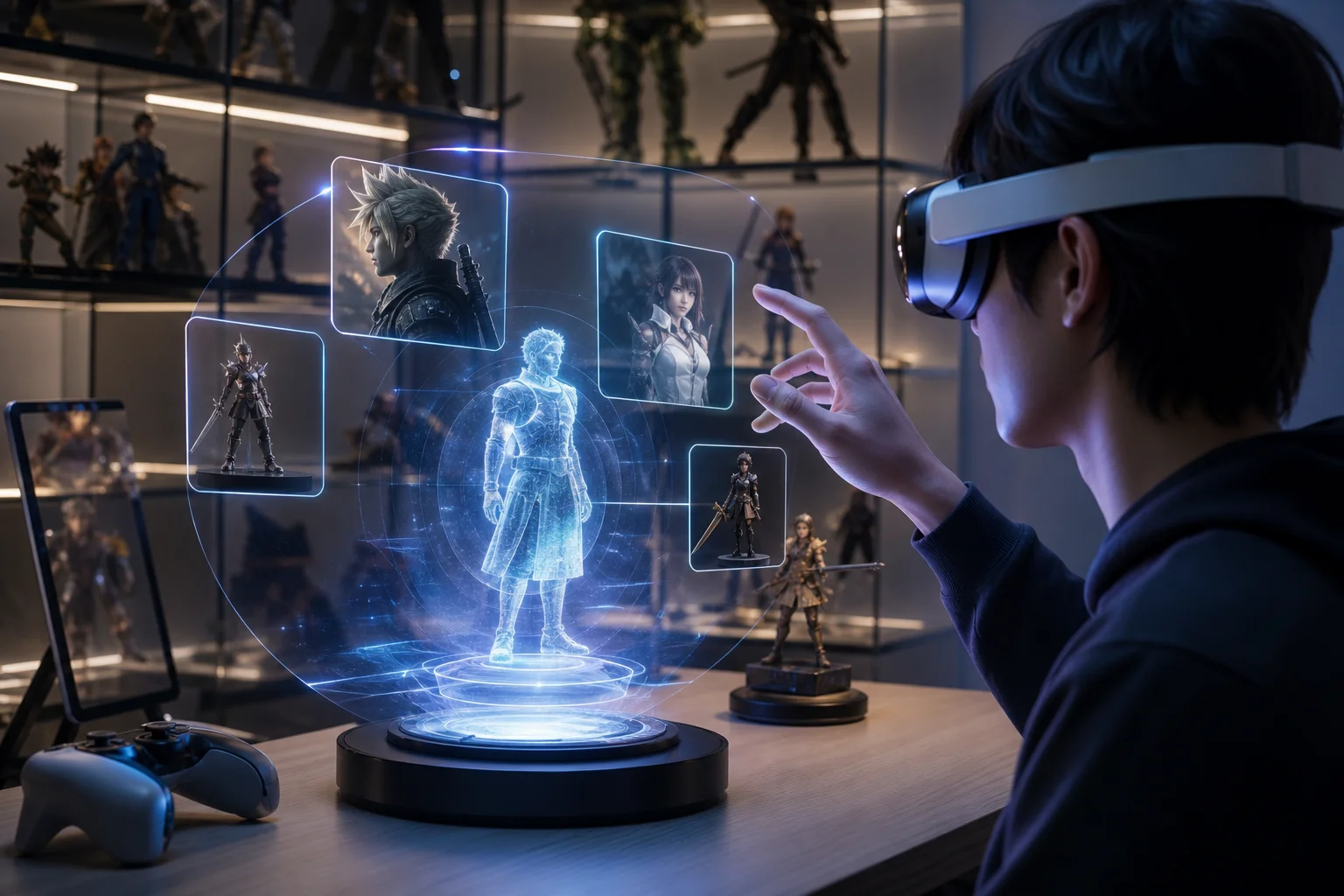
Google I/O 2026 was not a gaming event in the classic sense. There was no new console, no single blockbuster game reveal, and no simple headline that says “this is the future of gaming.” But for players, collectors, game developers, and figure fans, the announcements still matter. Google showed a direction where AI, XR, app discovery, video generation, and agentic assistants begin to reshape how games are found, experienced, marketed, and extended beyond the screen.
For Figure Rocks, that is the interesting part. Gaming culture no longer lives only inside the game executable. It moves through trailers, character design, collectibles, community clips, packaging, limited editions, AI-generated media, XR interfaces, and search-driven discovery. Google I/O 2026 points toward a future where those layers become more connected.
For the deeper technical breakdown of the broader Google I/O 2026 ecosystem, see the architecture analysis on stajic.de. This Figure Rocks article focuses on the gaming angle: what may change for game discovery, XR experiences, collector demand, and the next wave of physical-digital fandom.
The Short Version: Gaming Becomes More Connected to AI Infrastructure
The most important gaming implication is not one single feature. It is the infrastructure direction. Gemini models become more capable. Android XR expands as a spatial platform. Google Play is moving toward app and game discovery through Gemini. Creative tools like Gemini Omni point toward easier video and concept generation. Agentic systems begin to connect intent, content, and action.
- Games may be discovered through assistants instead of only through storefront browsing.
- XR experiences may become easier to prototype and distribute across Android-based spatial devices.
- Game marketing may rely more on AI-assisted video, character clips, and localized creative assets.
- Collectors may see faster merchandise cycles because characters and visual identities can be tested, promoted, and remixed more quickly.
- The line between game content, community content, and collectible culture may become less clean.
The future signal is not that AI replaces games. The signal is that AI becomes part of how games are discovered, explained, promoted, and extended into culture.— Figure Rocks perspective
1. Game Discovery Moves Toward Assistants
One of the most practical changes from Google I/O 2026 is app and game discovery through Gemini. Google Play’s I/O update states that apps and games will become discoverable in the Gemini app on Android and Web. That is a big shift because players may increasingly begin with a natural-language need instead of a storefront search.
A player might not search for a specific title. They might ask for a low-stress co-op game, a competitive shooter that runs well on their device, a controller-friendly RPG, or a family-safe game with short sessions. If Gemini becomes a discovery layer, game metadata, reviews, performance signals, and content descriptions become more important than raw store visibility alone.
// Old discovery pattern
user.opensStore()
user.searchesKeyword()
user.scrollsRankings() // New discovery pattern
user.askGemini("Find me a smooth co-op game for short evening sessions")
Gemini.matchesIntentWithGames()
Gemini.deepLinksToAppOrContent()
For serious game portals, this means structured editorial content matters more. A guide that clearly explains feel, performance, platform, genre, player type, and setup needs is easier for agentic systems to understand than a vague hype post. That fits the Figure Rocks approach: practical, experience-first, and connected to how people actually play.
2. AI Video and Character Media Become Faster
Gemini Omni is important for gaming because it points toward faster multimodal creation. Google describes Omni as a model that can combine text, images, audio, and video as input and generate high-quality videos, with conversational editing. For games, that does not only mean trailers. It also means pitch videos, mood tests, character showcases, environment concepts, and localized social clips.
This will likely affect small studios first. A team that cannot afford a large cinematic pipeline may use AI to test visual direction, communicate an atmosphere, or create early campaign material. That does not replace a real art team, but it can compress the distance between idea and presentation.
- Prototype trailers may appear earlier in development.
- Character mood clips may be used to test community interest before full reveal campaigns.
- Localized promo assets may become cheaper to produce.
- Collectors may see character popularity form faster because visual identity spreads faster.
- The risk of unofficial or misleading AI-generated media will also increase.
For collectors, this is a double-edged shift. Stronger early character media can help a design become recognizable before launch. But it can also create hype around visuals that may change later. Figure collectors should learn to separate official product photography, official license announcements, concept marketing, AI-generated promotional mood pieces, and fan-made visuals.
3. XR Will Probably Start as Companion Experience, Not Full Replacement
Android XR and intelligent eyewear are easy to overhype. The near-term gaming impact is probably not that every player suddenly moves into full XR. The more realistic path is companion layers: guides, maps, second-screen information, light spatial interactions, collectibles previews, and hands-free context.
Google’s I/O 2026 Android XR direction shows two categories of intelligent eyewear: audio glasses and display glasses. For gaming, that split matters. Audio-first help is less disruptive and may fit walkthroughs, social coordination, accessibility, or companion tips. Display glasses carry bigger potential, but also bigger risk: distraction, comfort, battery life, latency, and whether players actually want overlays while playing.
The first useful gaming XR experiences may not be full virtual worlds. They may be small, well-timed layers that reduce friction without stealing attention.— XR reality check
For collectors, XR could become more immediately useful than for hardcore gameplay. Imagine previewing a figure scale on a shelf, comparing box dimensions in space, checking display layout, or viewing a 3D character pose before buying. That kind of XR is practical, not futuristic theater.
4. Game Collectibles May Become More Data-Driven
The connection between games and figures is already strong. A character becomes popular, the design becomes recognizable, and manufacturers translate that identity into a physical object. Google I/O 2026 does not announce figure products, but the AI and discovery direction can still affect the collector market indirectly.
If AI systems make it easier to measure character interest, generate campaign variants, test visual identities, and route players into related content, the feedback loop around collectible demand can become faster. Publishers and manufacturers may see which characters, skins, factions, weapons, or moments get traction earlier. That can influence what becomes a statue, figma, amiibo-style NFC object, deluxe edition extra, or limited-run collectible.
- Characters with strong silhouettes may become even more valuable for merchandise.
- AI-assisted campaign testing may reveal collector interest earlier.
- Limited editions may become more tightly connected to game launch cycles and social video trends.
- Packaging and region differences may become more important if drops become more global and faster.
- Verification and authenticity will matter more as AI visuals make unofficial images easier to spread.
This is why Figure Rocks should continue connecting game news with collector logic. A game announcement is not only about software. It can be the beginning of a merchandise cycle, a resale pattern, a packaging question, or a display-value discussion. That is already visible in articles like the Figma Doom: The Dark Ages Doom Slayer DX Edition pre-order coverage, where franchise identity and figure value overlap.
5. The Performance Angle Still Matters
AI and XR do not remove the old gaming basics. They make them more important. If a game is discovered by an assistant, promoted with AI media, and extended through XR surfaces, the core play experience still has to feel good. Input delay, frame pacing, network instability, bad display processing, and stutter will still ruin the experience.
That is why this article belongs next to Figure Rocks’ practical experience guides. The future may bring AI agents and XR glasses, but players will still notice whether the game feels responsive. The foundation remains the same: clean timing, stable frame delivery, readable motion, controlled latency, and setup choices that actually improve play.
- For smoothness, start with Fix Stutter: How to Restore Stable Frame Delivery in Games.
- For control feel, start with Fix Input Lag: What Actually Improves Feel in Games.
- For broader portal logic, use the Experience-First pillar.
6. What to Watch Next
The most realistic gaming developments after Google I/O 2026 are not instant revolutions. They are gradual changes in discovery, tooling, marketing, XR companion use, and collectible timing. The important signals to watch are practical, not theatrical.
- How quickly games become discoverable through Gemini instead of only through classic store search.
- Whether Google Play metadata starts to matter more for assistant-based recommendations.
- How small studios use AI video and multimodal tools for trailers, pitches, and social content.
- Whether Android XR gets real game-adjacent companion experiences instead of only demos.
- Whether figure manufacturers react faster to game character trends and social visibility.
- Whether collectors need stronger verification habits because AI-generated product-like images become more common.
The Collector Warning: AI Visuals Are Not Product Proof
As AI media improves, collectors need a stricter rule: an image is not proof of a product. A beautiful render, generated shelf scene, fake box mockup, or concept-style character pose can travel fast online before any official license exists. That can create false expectations around pre-orders, limited editions, or supposed leaks.
The safer collector habit is simple: look for official manufacturer pages, retailer listings, license notices, event displays, prototype photos, SKU details, and reliable release information. AI will make visual hype cheaper. It will not make authenticity easier unless collectors become more disciplined.
In the next phase of gaming culture, collectors should trust provenance more than pixels.— Collector-grade rule
Final Perspective
Google I/O 2026 does not tell gamers that tomorrow’s games will all be AI-generated or fully XR-native. That would be lazy hype. The real signal is more grounded: AI will increasingly influence how games are discovered, how game media is created, how assistants connect players to content, how XR becomes a companion surface, and how character visibility turns into collectible demand.
For Figure Rocks, that is exactly the right territory: the overlap between gaming experience, smart tech, figure culture, and collector value. The next wave will not be only about playing games. It will be about how games become ecosystems — playable, searchable, wearable, collectible, and increasingly mediated by AI.
Related Articles
Полное руководство по Категории 23: освоение продвинутых техник для оптимальной производительности
Это всеобъемлющее руководство по Категории 23 исследует ее основные принципы, практическое применение и пошаговые стратегии для достижения превосходных результатов в конкурентных средах. Независимо от того, являетесь ли вы новичком или экспертом, узнайте, как использовать Категорию 23, чтобы превзойти стандарты в контекстах Категории 20.
Hero - номер 84
Фигурка amiibo Героя из серии Super Smash Bros. представляет стандартного Героя в том виде, в котором он появляется в Super Smash Bros. Ultimate. Это физическая фигурка NFC, которая может хранить игровые данные и взаимодействовать с совместимыми системами Nintendo. Проще говоря, это одновременно и предмет коллекционирования, и функциональная копия игрового персонажа. Дополнительная ценность заключается в возможности создавать и тренировать Фигурку-бойца (FP), которая развивается со временем в процессе взаимодействия с игроком.
Dark Samus - номер 81
Фигурка amiibo Темная Самус из серии Super Smash Bros. превращает игрового бойца в физический тренировочный модуль. Это не просто декоративный объект. Она сохраняет данные, вырабатывает модели поведения в совместимых играх и переносит историю матчей обратно в игру. Ее дополнительная ценность заключается в этом постоянстве. Фигурка становится адаптивным противником, а не просто статичным разблокируемым элементом.
Simon - номер 78
Фигурка amiibo Саймона из серии Super Smash Bros. представляет игрового бойца Саймона Бельмонта, представленного в Super Smash Bros. Ultimate. Это NFC-фигурка персонажа с игровым функционалом. С практической точки зрения это физический носитель данных, который может хранить и передавать данные бойца в совместимые системы Nintendo. Никакой мистики, просто пластиковая фигурка с чипом.
Стив - номер 89
Amiibo Стива из серии Super Smash Bros. расширяет концепцию игровых фигурок, сочетая всемирно известного персонажа с системой amiibo от Nintendo, основанной на обучении. Это функциональная NFC-фигурка, которая хранит данные и взаимодействует с совместимым программным обеспечением. На практике она служит настраиваемым бойцом в Super Smash Bros. Ultimate и бонусной фигуркой с функцией чтения в ряде других игр Nintendo.
Исправление сети: как восстановить стабильную сетевую игру в играх
Сетевые проблемы в играх часто ошибочно принимают за обычные лаги. В этом руководстве объясняется, как отличить реальную нестабильность онлайн-соединения от локальных проблем с таймингом, диагностировать, что именно не так, и исправить работу сети в правильном порядке.
Isabelle – Summer Outfit
Среди фигурок amiibo Animal Crossing, выпущенных Nintendo, версия «Изабель — летний наряд» представляет собой сезонную вариацию одного из центральных персонажей серии. Фигурка обладает той же технической функциональностью, что и другие amiibo Animal Crossing, но её внешний вид отражает более легкий и расслабленный тон, часто встречающийся во время летних событий в играх. При сканировании через NFC фигурка взаимодействует с несколькими совместимыми играми и открывает небольшие внутриигровые взаимодействия, связанные с самой Изабель.
Chrom - номер 80
Amiibo Хрома из серии Super Smash Bros. воплощает персонажа в физической форме, добавляя при этом функциональные возможности на совместимых системах Nintendo. Это не просто украшение. Она сохраняет данные там, где это поддерживается, и открывает определенный внутриигровой контент. Практическая ценность сосредоточена на функции обучения в Super Smash Bros. Ultimate и на небольших бонусах в отдельных играх серии Fire Emblem.
Исправляем инпут-лаг: что на самом деле улучшает отклик в играх
Инпут-лаг редко сводится к одной настройке и почти никогда не имеет одной простой причины. Это руководство объясняет, где на самом деле накапливается задержка, как она влияет на ощущения и в каком порядке применять исправления, чтобы реально улучшить отзывчивость без эффекта плацебо.
Kazuya - номер 91
Фигурка amiibo Кадзуи из серии Super Smash Bros. расширяет возможности персонажа за пределы экрана. Она не является просто декоративным дополнением сама по себе. Она сохраняет данные, адаптируется к поведению игрока и возвращается в совместимые игры с выученными моделями поведения. На практике она становится постоянным партнером по тренировкам. Дополнительная ценность заключается в непрерывности. Матчи не просто заканчиваются; они накапливаются.
Предстоящие Nintendo amiibo – новые фигурки, сроки выхода и функциональное значение
amiibo — это физические фигурки, оснащенные NFC-чипами, которые взаимодействуют с консолями Nintendo. Они открывают внутриигровые предметы, косметические элементы или небольшие игровые функции в совместимых играх. Этот обзор каталога посвящен официально анонсированным предстоящим amiibo, ожидаемым срокам их выпуска, их функциональной ценности и их положению в рамках более широкой структуры волн.
Ivysaur - номер 76
Фигурка amiibo Ивизавр из серии Super Smash Bros. представляет собой среднюю стадию эволюции классического покемона травяного типа в линейке кроссовер-файтингов Nintendo. Это физическая фигурка NFC, которую можно сканировать в совместимых играх. С практической точки зрения она хранит данные, обучается в процессе игры и открывает определенные внутриигровые элементы в зависимости от используемого программного обеспечения. Никакой загадки. Это инструмент для тренировок, предмет коллекционирования и функциональный аксессуар.