
Google I/O 2026 and Gaming: AI, XR, and the Next Wave of Collectibles
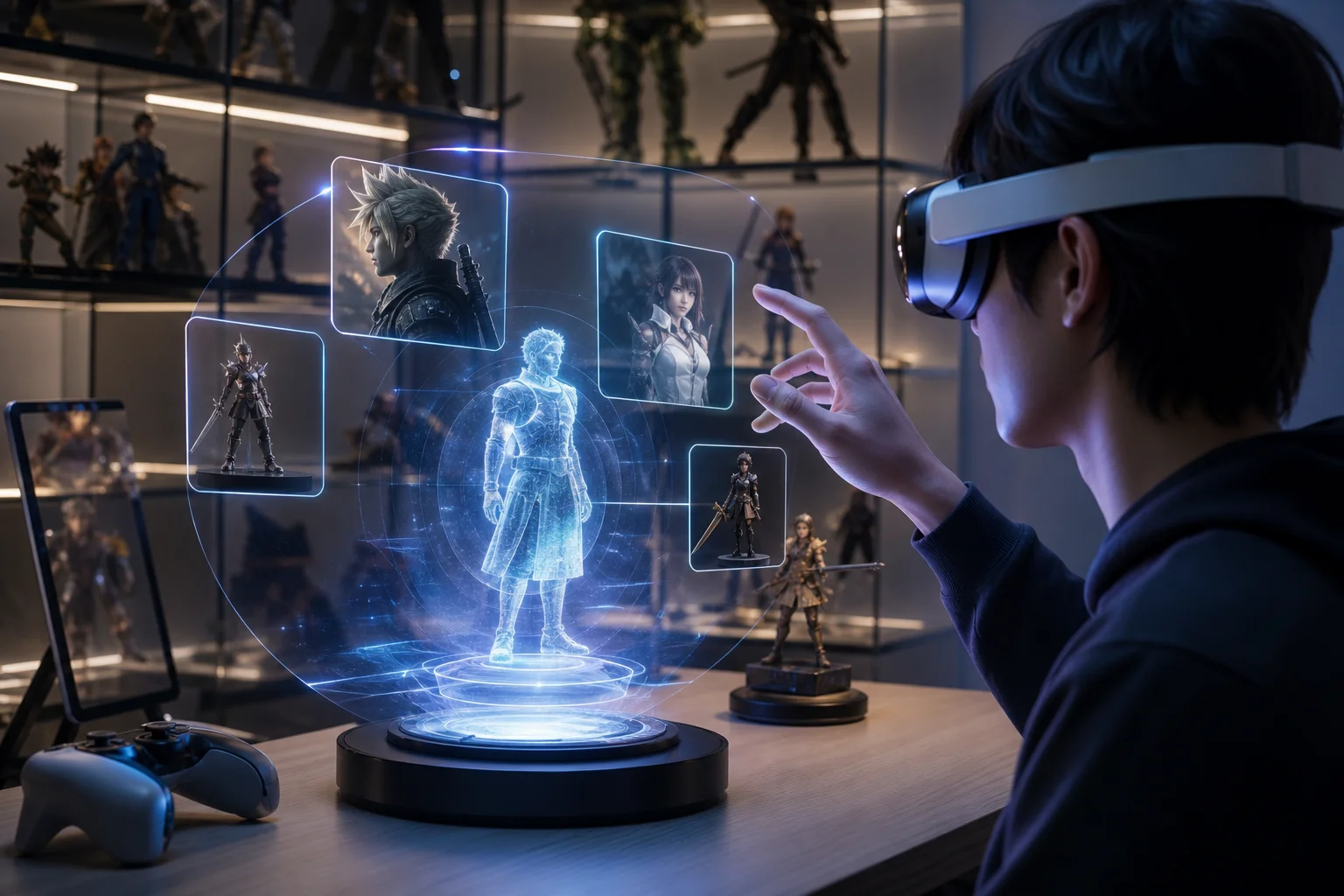
Google I/O 2026 was not a gaming event in the classic sense. There was no new console, no single blockbuster game reveal, and no simple headline that says “this is the future of gaming.” But for players, collectors, game developers, and figure fans, the announcements still matter. Google showed a direction where AI, XR, app discovery, video generation, and agentic assistants begin to reshape how games are found, experienced, marketed, and extended beyond the screen.
For Figure Rocks, that is the interesting part. Gaming culture no longer lives only inside the game executable. It moves through trailers, character design, collectibles, community clips, packaging, limited editions, AI-generated media, XR interfaces, and search-driven discovery. Google I/O 2026 points toward a future where those layers become more connected.
For the deeper technical breakdown of the broader Google I/O 2026 ecosystem, see the architecture analysis on stajic.de. This Figure Rocks article focuses on the gaming angle: what may change for game discovery, XR experiences, collector demand, and the next wave of physical-digital fandom.
The Short Version: Gaming Becomes More Connected to AI Infrastructure
The most important gaming implication is not one single feature. It is the infrastructure direction. Gemini models become more capable. Android XR expands as a spatial platform. Google Play is moving toward app and game discovery through Gemini. Creative tools like Gemini Omni point toward easier video and concept generation. Agentic systems begin to connect intent, content, and action.
- Games may be discovered through assistants instead of only through storefront browsing.
- XR experiences may become easier to prototype and distribute across Android-based spatial devices.
- Game marketing may rely more on AI-assisted video, character clips, and localized creative assets.
- Collectors may see faster merchandise cycles because characters and visual identities can be tested, promoted, and remixed more quickly.
- The line between game content, community content, and collectible culture may become less clean.
The future signal is not that AI replaces games. The signal is that AI becomes part of how games are discovered, explained, promoted, and extended into culture.— Figure Rocks perspective
1. Game Discovery Moves Toward Assistants
One of the most practical changes from Google I/O 2026 is app and game discovery through Gemini. Google Play’s I/O update states that apps and games will become discoverable in the Gemini app on Android and Web. That is a big shift because players may increasingly begin with a natural-language need instead of a storefront search.
A player might not search for a specific title. They might ask for a low-stress co-op game, a competitive shooter that runs well on their device, a controller-friendly RPG, or a family-safe game with short sessions. If Gemini becomes a discovery layer, game metadata, reviews, performance signals, and content descriptions become more important than raw store visibility alone.
// Old discovery pattern
user.opensStore()
user.searchesKeyword()
user.scrollsRankings() // New discovery pattern
user.askGemini("Find me a smooth co-op game for short evening sessions")
Gemini.matchesIntentWithGames()
Gemini.deepLinksToAppOrContent()
For serious game portals, this means structured editorial content matters more. A guide that clearly explains feel, performance, platform, genre, player type, and setup needs is easier for agentic systems to understand than a vague hype post. That fits the Figure Rocks approach: practical, experience-first, and connected to how people actually play.
2. AI Video and Character Media Become Faster
Gemini Omni is important for gaming because it points toward faster multimodal creation. Google describes Omni as a model that can combine text, images, audio, and video as input and generate high-quality videos, with conversational editing. For games, that does not only mean trailers. It also means pitch videos, mood tests, character showcases, environment concepts, and localized social clips.
This will likely affect small studios first. A team that cannot afford a large cinematic pipeline may use AI to test visual direction, communicate an atmosphere, or create early campaign material. That does not replace a real art team, but it can compress the distance between idea and presentation.
- Prototype trailers may appear earlier in development.
- Character mood clips may be used to test community interest before full reveal campaigns.
- Localized promo assets may become cheaper to produce.
- Collectors may see character popularity form faster because visual identity spreads faster.
- The risk of unofficial or misleading AI-generated media will also increase.
For collectors, this is a double-edged shift. Stronger early character media can help a design become recognizable before launch. But it can also create hype around visuals that may change later. Figure collectors should learn to separate official product photography, official license announcements, concept marketing, AI-generated promotional mood pieces, and fan-made visuals.
3. XR Will Probably Start as Companion Experience, Not Full Replacement
Android XR and intelligent eyewear are easy to overhype. The near-term gaming impact is probably not that every player suddenly moves into full XR. The more realistic path is companion layers: guides, maps, second-screen information, light spatial interactions, collectibles previews, and hands-free context.
Google’s I/O 2026 Android XR direction shows two categories of intelligent eyewear: audio glasses and display glasses. For gaming, that split matters. Audio-first help is less disruptive and may fit walkthroughs, social coordination, accessibility, or companion tips. Display glasses carry bigger potential, but also bigger risk: distraction, comfort, battery life, latency, and whether players actually want overlays while playing.
The first useful gaming XR experiences may not be full virtual worlds. They may be small, well-timed layers that reduce friction without stealing attention.— XR reality check
For collectors, XR could become more immediately useful than for hardcore gameplay. Imagine previewing a figure scale on a shelf, comparing box dimensions in space, checking display layout, or viewing a 3D character pose before buying. That kind of XR is practical, not futuristic theater.
4. Game Collectibles May Become More Data-Driven
The connection between games and figures is already strong. A character becomes popular, the design becomes recognizable, and manufacturers translate that identity into a physical object. Google I/O 2026 does not announce figure products, but the AI and discovery direction can still affect the collector market indirectly.
If AI systems make it easier to measure character interest, generate campaign variants, test visual identities, and route players into related content, the feedback loop around collectible demand can become faster. Publishers and manufacturers may see which characters, skins, factions, weapons, or moments get traction earlier. That can influence what becomes a statue, figma, amiibo-style NFC object, deluxe edition extra, or limited-run collectible.
- Characters with strong silhouettes may become even more valuable for merchandise.
- AI-assisted campaign testing may reveal collector interest earlier.
- Limited editions may become more tightly connected to game launch cycles and social video trends.
- Packaging and region differences may become more important if drops become more global and faster.
- Verification and authenticity will matter more as AI visuals make unofficial images easier to spread.
This is why Figure Rocks should continue connecting game news with collector logic. A game announcement is not only about software. It can be the beginning of a merchandise cycle, a resale pattern, a packaging question, or a display-value discussion. That is already visible in articles like the Figma Doom: The Dark Ages Doom Slayer DX Edition pre-order coverage, where franchise identity and figure value overlap.
5. The Performance Angle Still Matters
AI and XR do not remove the old gaming basics. They make them more important. If a game is discovered by an assistant, promoted with AI media, and extended through XR surfaces, the core play experience still has to feel good. Input delay, frame pacing, network instability, bad display processing, and stutter will still ruin the experience.
That is why this article belongs next to Figure Rocks’ practical experience guides. The future may bring AI agents and XR glasses, but players will still notice whether the game feels responsive. The foundation remains the same: clean timing, stable frame delivery, readable motion, controlled latency, and setup choices that actually improve play.
- For smoothness, start with Fix Stutter: How to Restore Stable Frame Delivery in Games.
- For control feel, start with Fix Input Lag: What Actually Improves Feel in Games.
- For broader portal logic, use the Experience-First pillar.
6. What to Watch Next
The most realistic gaming developments after Google I/O 2026 are not instant revolutions. They are gradual changes in discovery, tooling, marketing, XR companion use, and collectible timing. The important signals to watch are practical, not theatrical.
- How quickly games become discoverable through Gemini instead of only through classic store search.
- Whether Google Play metadata starts to matter more for assistant-based recommendations.
- How small studios use AI video and multimodal tools for trailers, pitches, and social content.
- Whether Android XR gets real game-adjacent companion experiences instead of only demos.
- Whether figure manufacturers react faster to game character trends and social visibility.
- Whether collectors need stronger verification habits because AI-generated product-like images become more common.
The Collector Warning: AI Visuals Are Not Product Proof
As AI media improves, collectors need a stricter rule: an image is not proof of a product. A beautiful render, generated shelf scene, fake box mockup, or concept-style character pose can travel fast online before any official license exists. That can create false expectations around pre-orders, limited editions, or supposed leaks.
The safer collector habit is simple: look for official manufacturer pages, retailer listings, license notices, event displays, prototype photos, SKU details, and reliable release information. AI will make visual hype cheaper. It will not make authenticity easier unless collectors become more disciplined.
In the next phase of gaming culture, collectors should trust provenance more than pixels.— Collector-grade rule
Final Perspective
Google I/O 2026 does not tell gamers that tomorrow’s games will all be AI-generated or fully XR-native. That would be lazy hype. The real signal is more grounded: AI will increasingly influence how games are discovered, how game media is created, how assistants connect players to content, how XR becomes a companion surface, and how character visibility turns into collectible demand.
For Figure Rocks, that is exactly the right territory: the overlap between gaming experience, smart tech, figure culture, and collector value. The next wave will not be only about playing games. It will be about how games become ecosystems — playable, searchable, wearable, collectible, and increasingly mediated by AI.
Related Articles
How We Test Gear: A Simple Experience-First Method
A clear method: define the outcome, stabilize the chain, test one change, and keep only what improves real play.
What Would a Spark-Like Gaming PC Actually Change? Unified Memory, AI Compute and the Classic GPU Split
The Game Engine Is Becoming Part Renderer, Part Scheduler, Part AI System
Game engines used to orchestrate simulation and rendering. Neural graphics, predictive memory and game agents are adding a third responsibility: deciding where inference belongs inside the frame and the game state.
Console vs PC Display Setup: The Clean, Stable Way
Console and PC need different display priorities. This guide avoids common mistakes and keeps motion and latency consistent.
Gaming Controls: Build Input Feel Without Hand Pain
Controls shape responsiveness and comfort. This guide focuses on ergonomics, consistency, and practical setup habits.
Products: Objects That Improve Gaming Feel
Curated products for better play: clarity, responsiveness, comfort, and stability — chosen by experience, not by hype.
Responsiveness in Gaming: What It Really Means
Responsiveness is the feeling of instant control. Here’s what creates it, what destroys it, and how to improve it without chasing myths.
Gaming Comfort: Ergonomics That Prevent Fatigue (Long Sessions, No Pain)
Comfort is performance. Learn a practical ergonomics baseline for chair, desk, monitor, and controls to reduce fatigue and keep consistency over long sessions.
MTU Myths for Gaming: When Changing MTU Helps (Rare) vs Breaks Things
MTU tweaks are usually placebo and can cause fragmentation issues. Learn when MTU changes are actually relevant and a safe approach if you must test.
Ergonomics for Long Sessions: Comfort That Prevents Fatigue
Comfort is performance. Use this simple ergonomics baseline to reduce fatigue, keep control consistent, and play longer without pain.
Upcoming Nintendo amiibo – New Figures, Release Windows and Functional Significance
amiibo are physical figures equipped with NFC chips that communicate with Nintendo consoles. They unlock in-game items, cosmetic elements, or small gameplay functions in compatible titles. This catalog overview focuses on officially announced upcoming amiibo, their expected release windows, their functional value, and their position within the broader wave structure.
amiibo Editions – Waves, Variants, and Their Role in Nintendo’s Game History
amiibo are NFC-based character figures and cards released by Nintendo since 2014. In simple terms, they are physical collectibles that store data and interact with compatible games. The concept is technical but not complicated: a small chip inside the figure communicates with a console. What developed around this function, however, is a structured system of editions, waves, and re-releases that reflect Nintendo’s game history.